How we spent four days in Easter island
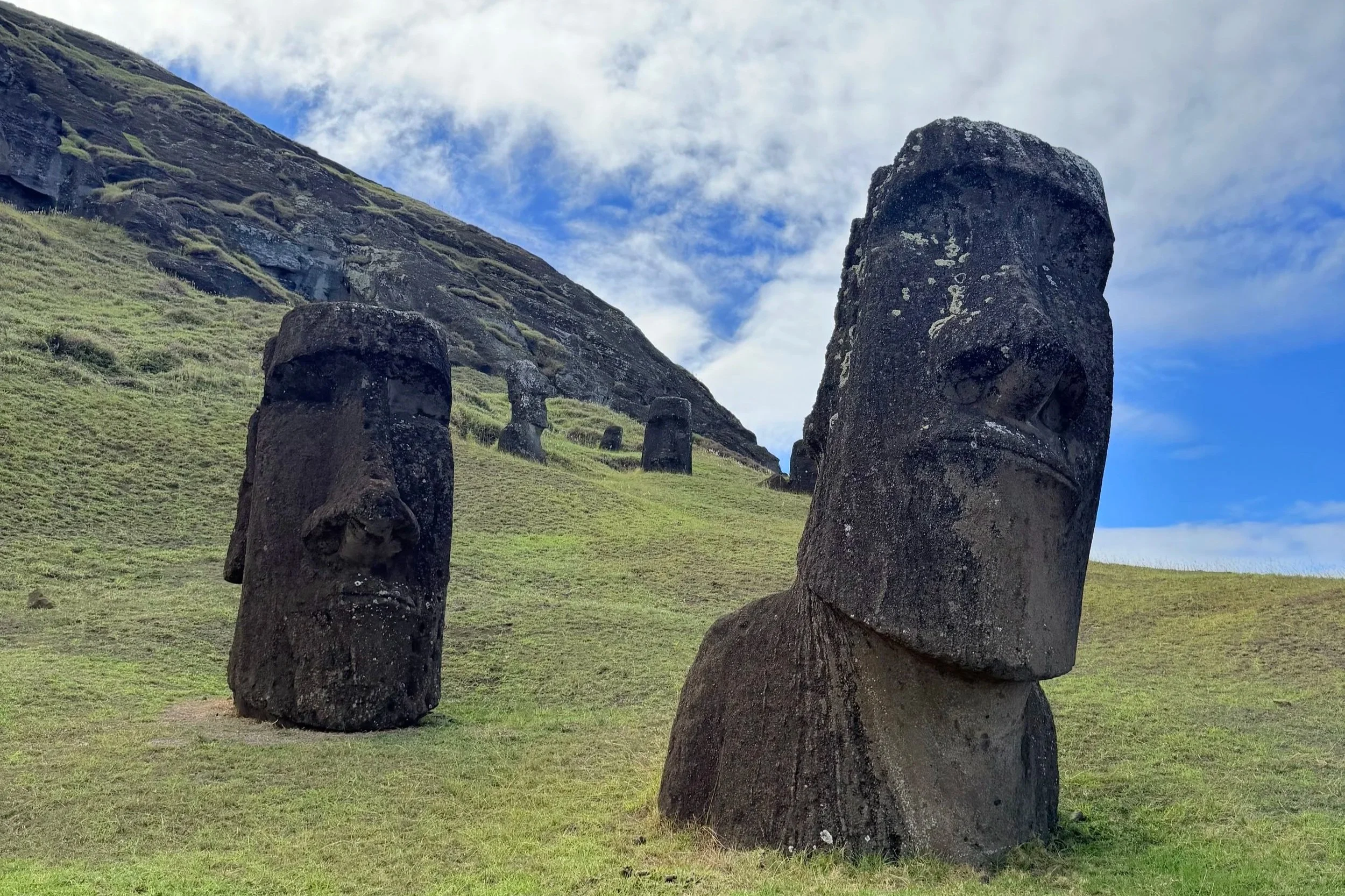
Rapa Nui, known as Easter Island in English and Isla de Pascua in Spanish, is technically part of Chile. But the closest people to the island are in the international space station when it passes by… it’s one of the most remote islands on earth and has an amazing history.
Rapa Nui is best known for its Moai (the “Easter Island heads”) and it’s the history around these statues that attract most visitors to the island. But as we found out, there’s a lot more to Rapa Nui than that.
We spent three days in Rapa Nui in April. This is what you need to know before you go.
How to get to Rapa Nui
You can only get to Rapa Nui from Santiago airport in Chile. There are two flights per day to and from the island and the airport even has its own designated customs area for Rapa Nui.
It isn’t cheap — flights cost around £375 — and the flight takes 4-5 hours with LATAM.
Where to stay in Rapa Nui
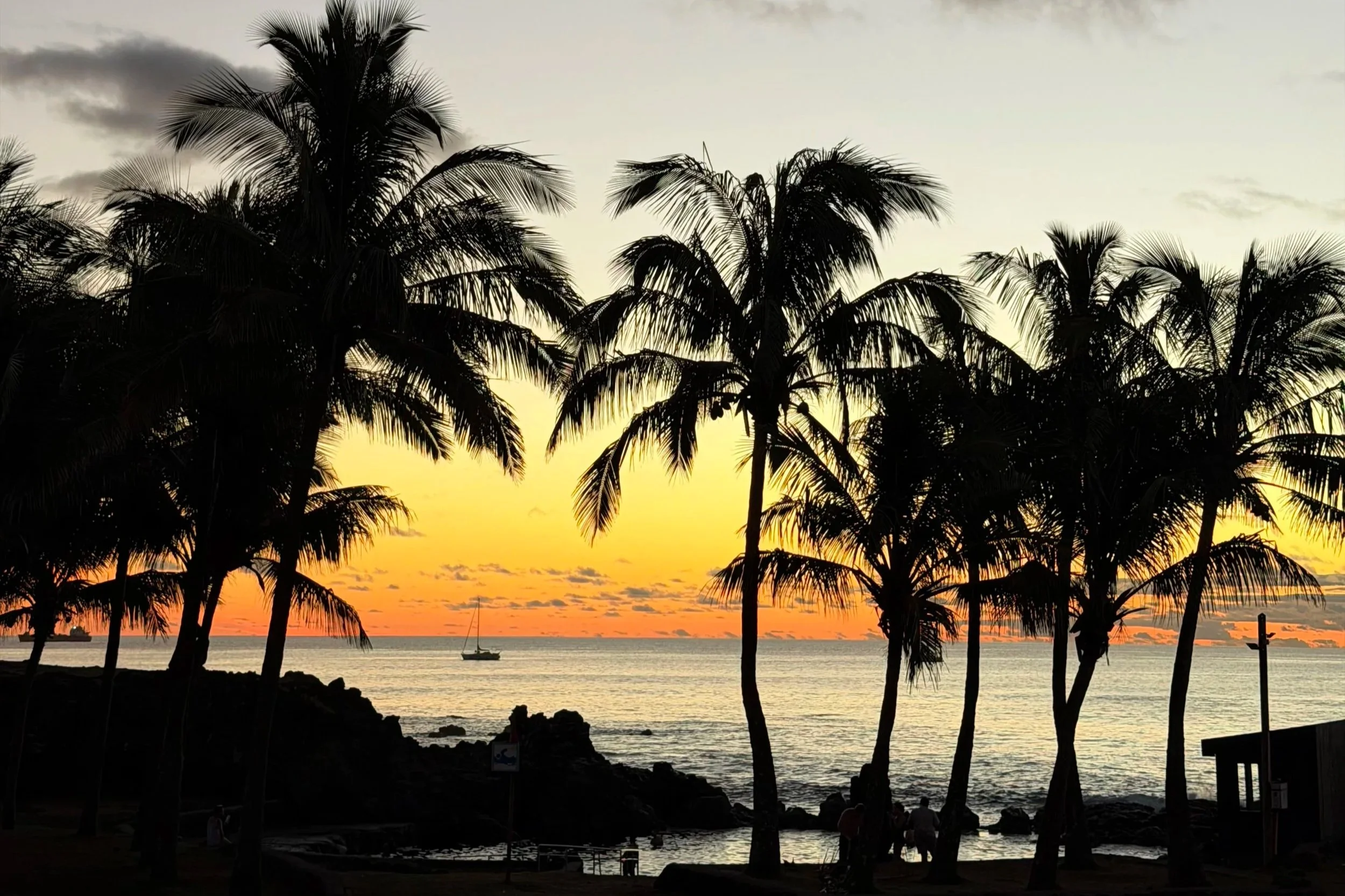
There are a range of hotels and Airbnbs in Rapa Nui including luxury remote accommodation, small cabins, basic hotels, and homestays.
We stayed at Hanga Roa Reka, a hostel-style homestay/Airbnb with private en-suite rooms and a shared kitchen. This was perfect for us as it was only 5-10 minutes walk into the main area of Hanga Roa and the rooms were bright and modern but not too expensive — there is a lot of very dated-looking accommodation in Rapa Nui and a lot of it appears overpriced for what it is. But the island’s main economy is tourism so nothing is that cheap… more on that later.
Do you need a tour guide in Rapa Nui?
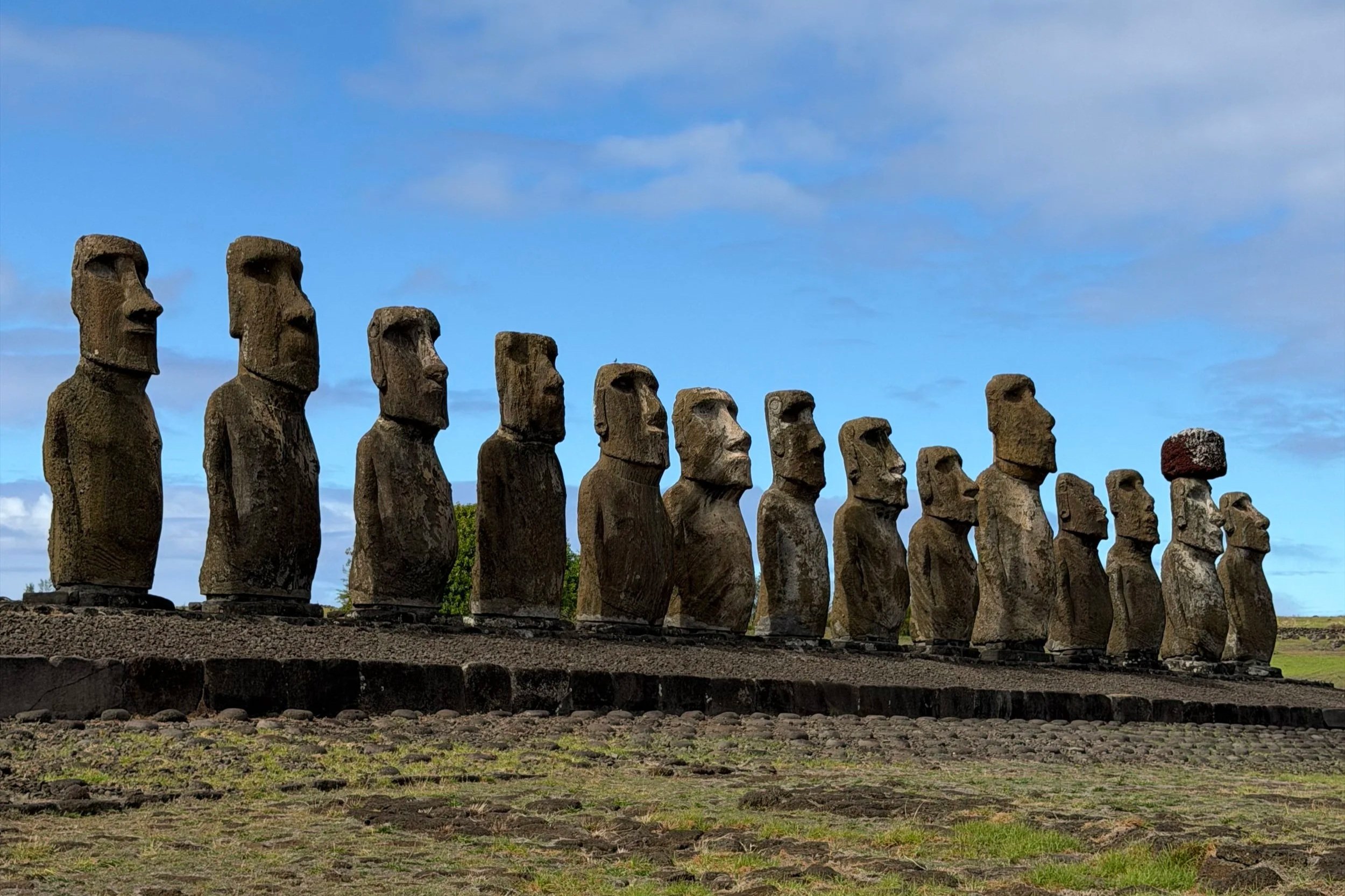
To enter the main historic sites and the national park of Rapa Nui you must have a registered guide. You can find a guide through an official tour company if you want a group tour, or on this website if you’d prefer a private guide.
Our guide, Ata Cristino, was excellent. His parents were involved in the restoration of many of the historic sites on the island and as a born-and-raised islander he was very knowledgeable about all the sites we visited, but also very rational and reasonable. We never felt he was trying to push an ideology or sway our opinions on any point. Ata collected us from our Airbnb each morning and dropped us off either there or in town depending on our plans.
You can contact him to arrange your own private tours on WhatsApp here +56 9 6667 7563 or email atarikicristino.ats@gmail.com.
What tours to do in Rapa Nui
There are so many tour agencies and guides in Rapa Nui that it can be overwhelming to pick one. We found Ata through another blog that recommended him, and were very glad we made this choice. Rather than doing two full days in the national park, we only had a day and a half and chose to have a free day to relax at the beach. So Ata chose the ‘best’ or most important sights for us to see and it was perfect for us.
Should I book a private guide or a group tour in Rapa Nui?
If you want to see everything, and have two or more full days to go on tours, you might prefer an organised group tour. Rapa Nui dream offers a range of experiences that cover pretty much all of the main attractions.
You can also choose whether you book a tour or a guide that includes transportation, or one that requires your own car.
Read about our full tour experience in Rapa Nui here.
What are the main sites in Rapa Nui?
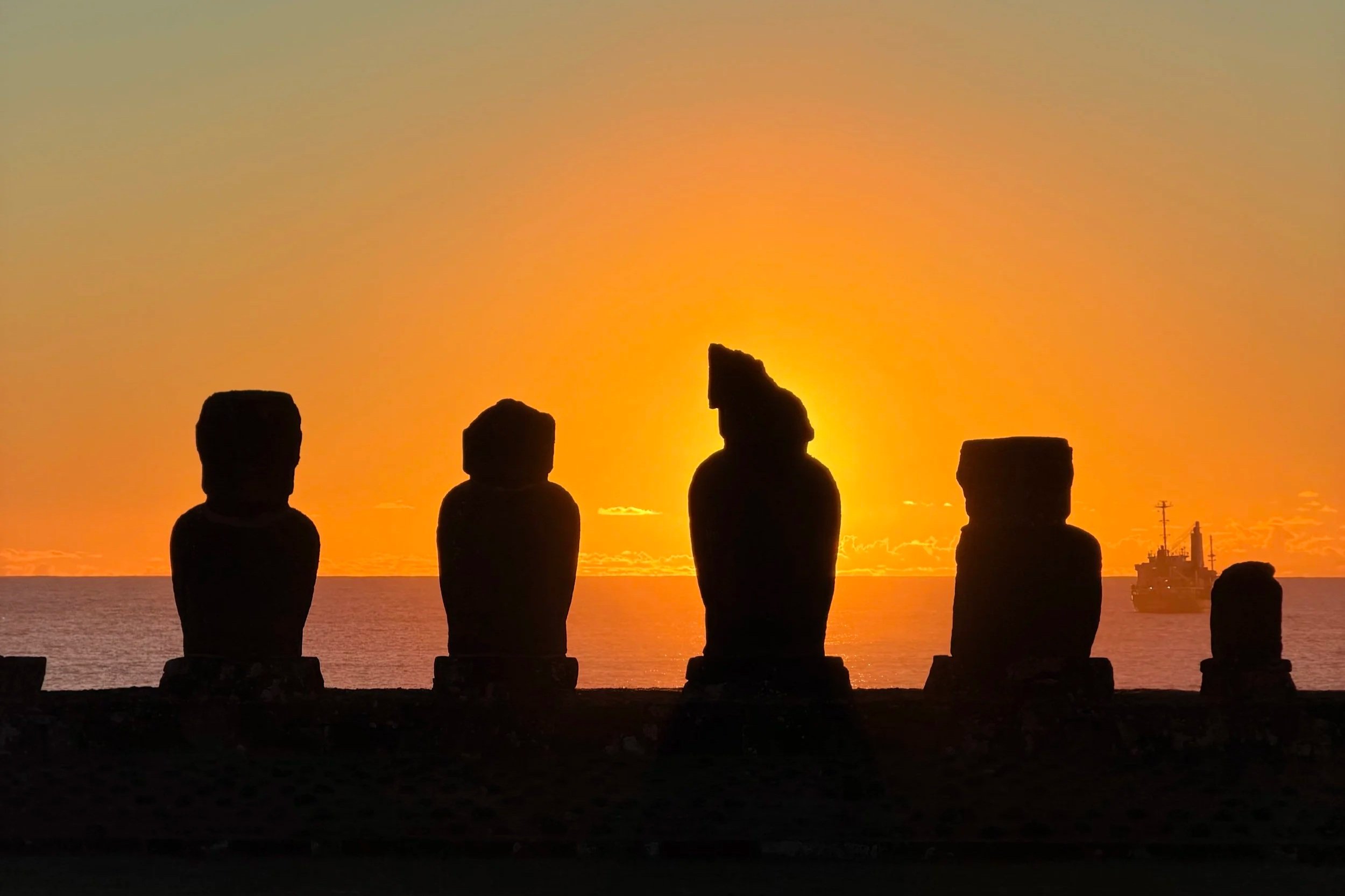
There are so many points of interest in Rapa Nui that it might not be possible to see all of them in one short trip. But these were the most interesting sites we visited during our 1.5 day tour in Rapa Nui.
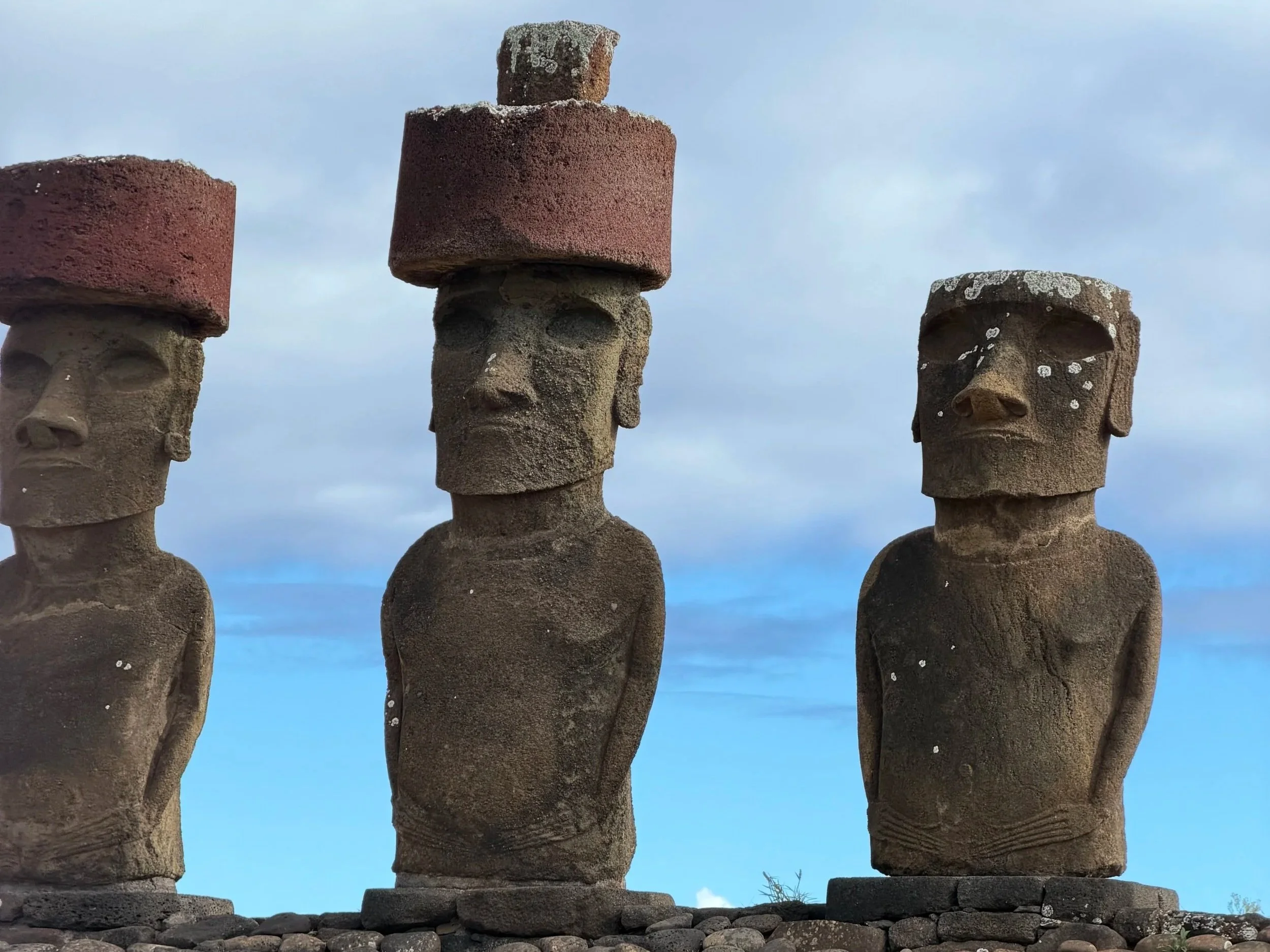
Ahu Akivi / Ahu a Tiu - seven Moai heads facing the ocean
Puna Pau - the site where the Moai’s ‘topknots’ were made, with view over west of island
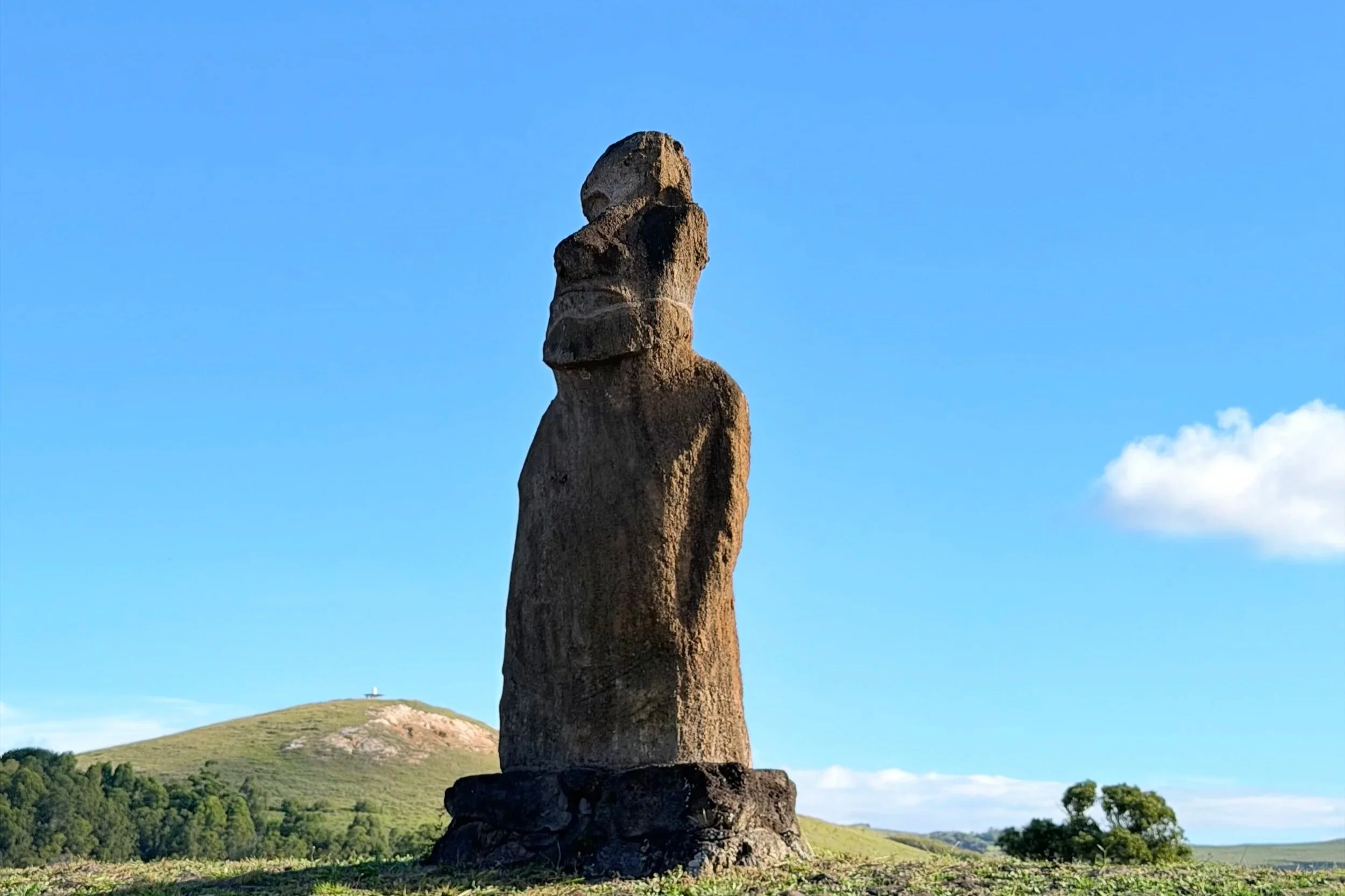
Ahu Huri - a stand-alone head
Ahu Tahai - a famous sunset spot with a row of Moai and two standing alone
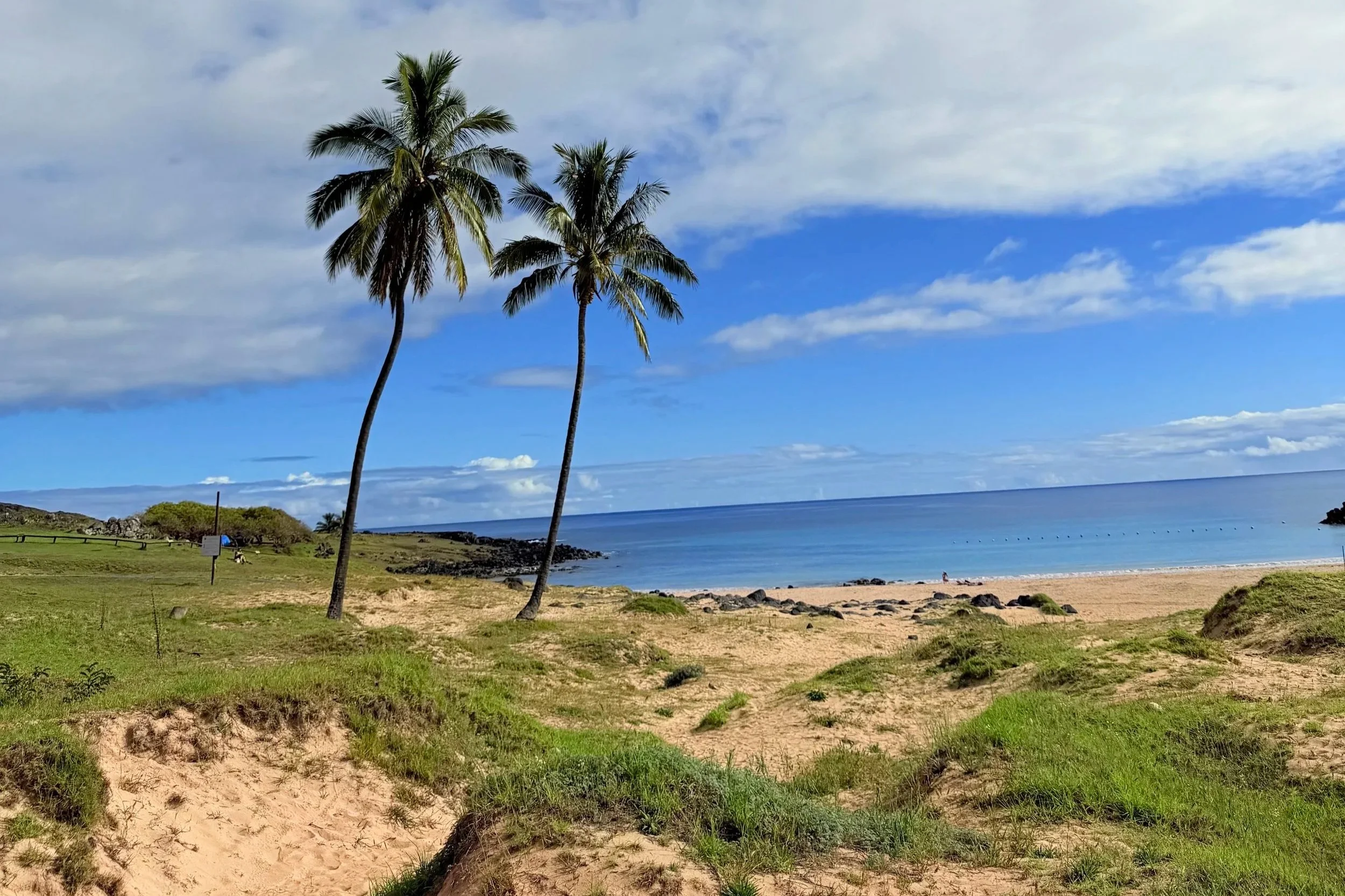
Ahu Nau Nau - a row of Moai at the back of Anakena beach
Ahu Tongariki - the famous row of 15 Moai
Rano a Raraku - the quarry where hundreds of Moai were abandoned at the end of the Moai chapter
Orongo - the village that was the site of the annual Birdman competition
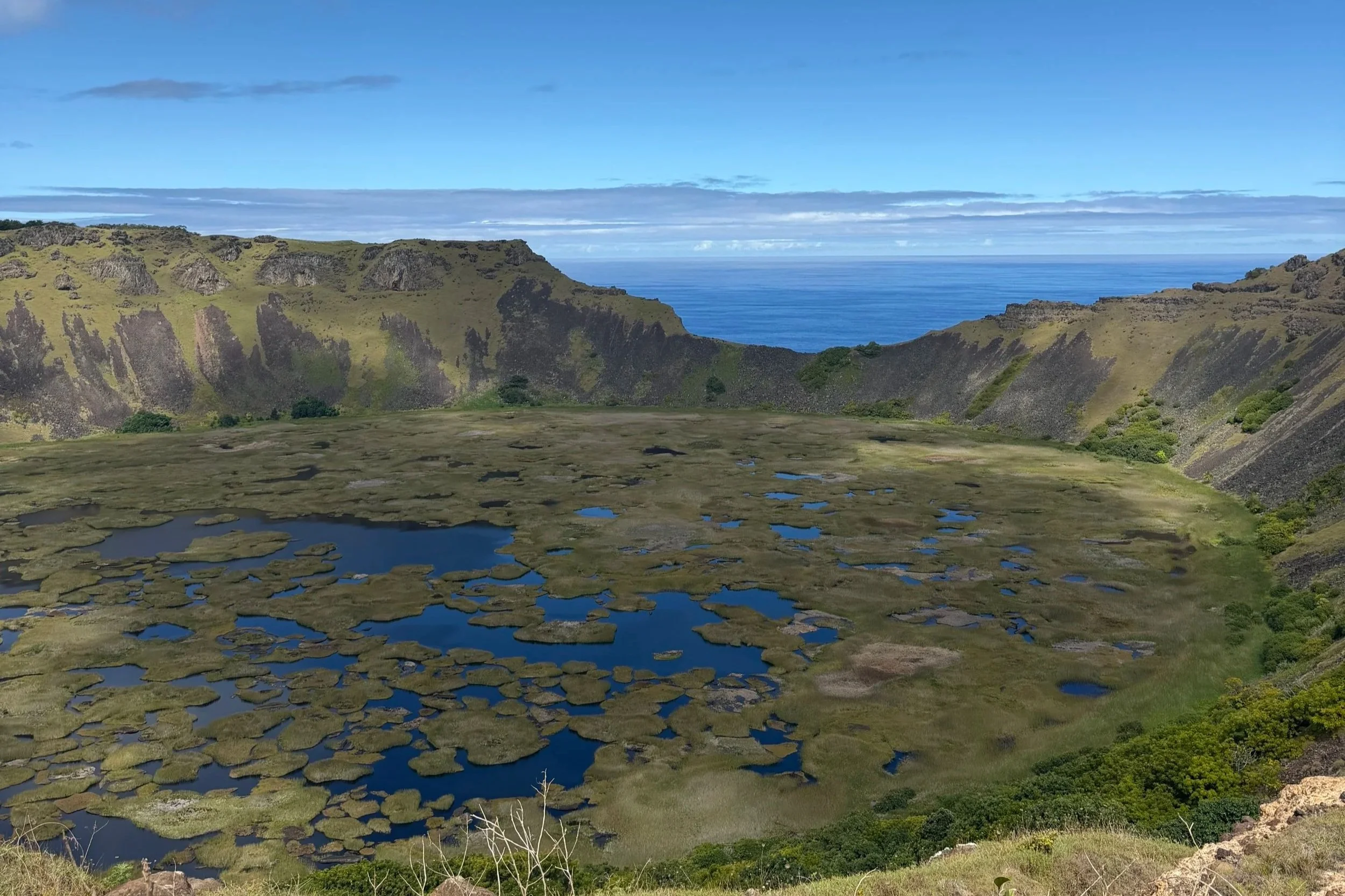
Rano Kao - the crater of the volcano that formed south west corner of island
Read our full Rapa Nui tour itinerary here and find out more about these sites and their significance.
Things we didn’t cover on our tour
Te Pito Kura - the site of a magnetic stone said to have mystic powers
Vaihu - an area where people would have lived and kept livestock
Akahanga - the tomb of the island’s first king, and an old settlement
Ana Vai Teka - a cave with a small lagoon
What can you do without a guide in Rapa Nui?
Anakena beach - spend an afternoon at this stunning beach. You can access the beach itself without a guide, but not the area with the Moai.
Go for a hike - there are a couple of routes that you are allowed to hike without a guide, including the path up Rank Kao volcano (but not the national park areas)
Hanga Roa - explore the small town of Hanga Roa, where there are bars, restaurants, sea pools, and Moai that you can see without a guide.
Go diving or snorkelling - many tour companies in Rapa Nui also offer diving trips, depending on the weather.
Where to eat and drink in Rapa Nui
Makona - fresh food that’s perfect for lunch or dinner
Te Moana - one of the more expensive/upmarket restaurants in town that has a live show every other night
Kanahau - probably our favourite dinner spot with excellent seafood
Le Frits - a relaxed bar with a varied menu and live music
Kona o’ Pule - a beachside restaurant at Anakena with good drinks and delicious food for lunch
Topa Ra’a - a chilled bar with a stunning sunset view close to Ahu Tahai
What is the correct name for Easter Island?
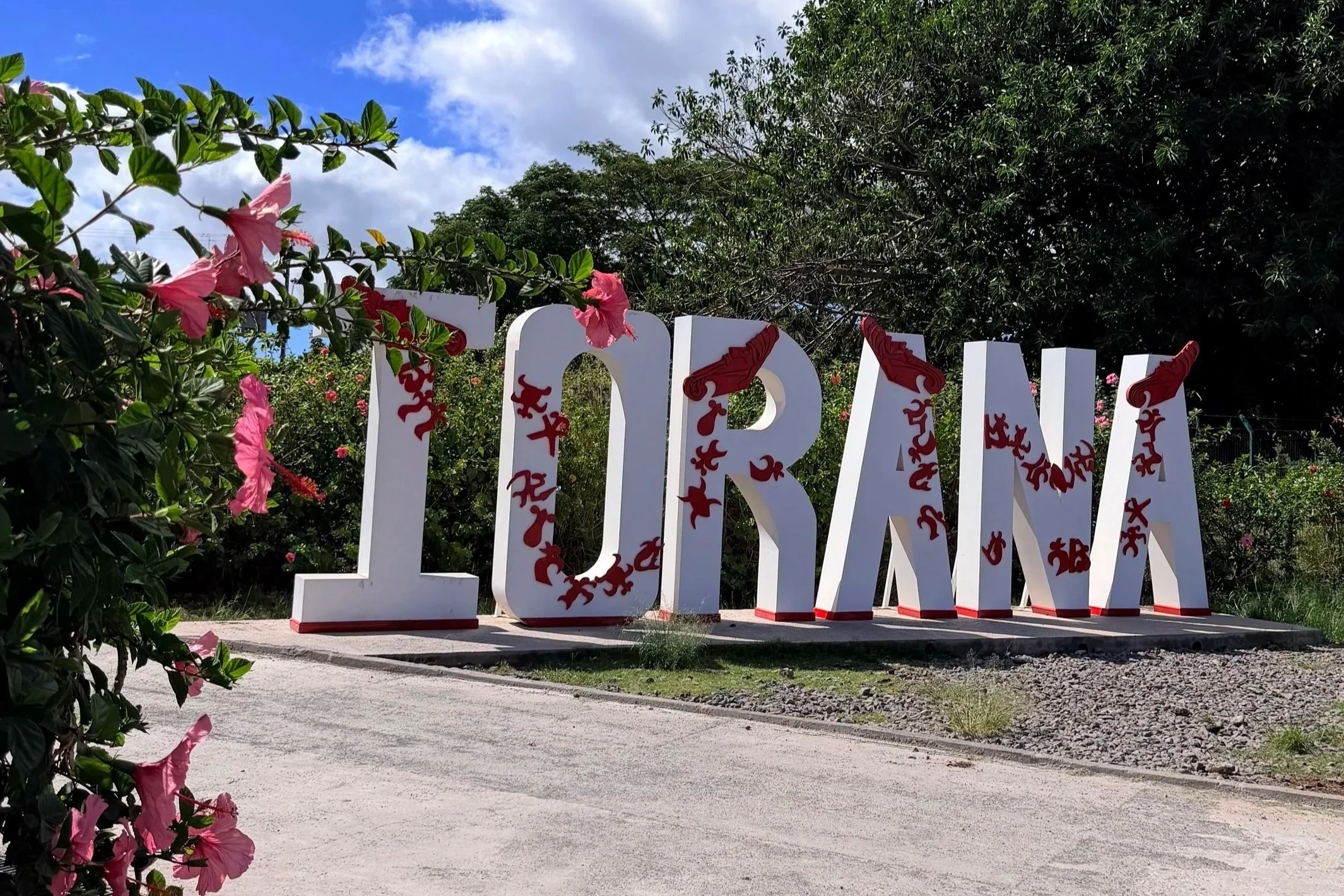
In Rapa Nui you will never see or hear the words Easter Island or Isla de Pascua. In Spanish and English, the island got this name after being ‘discovered’ by Dutch explorer Jacob Roggeveen on Easter Sunday in 1722. But to the islanders, it is Rapa Nui, the name given to the islands by the Polynesians who inhabited it first.
Is Rapa Nui cheap?
Rapa Nui is not cheap. It costs a lot to get there, food and drink is expensive, and tour guides are fairly expensive. Access to the National Park requires a pass (valid for 10 days) which costs about £90. And although accommodation prices vary, none of it is particularly cheap (especially considering the quality of some cabins and hotels).
However, it’s worth every penny. A trip to Rapa Nui is a holiday of a lifetime and the money you spend goes to supporting the local economy in this small, remote place. It’s expensive and still fairly difficult to get a lot of resources like gas to Rapa Nui, so it’s no surprise that it’s expensive for visitors and locals alike.
Do you need to rent a car in Rapa Nui?
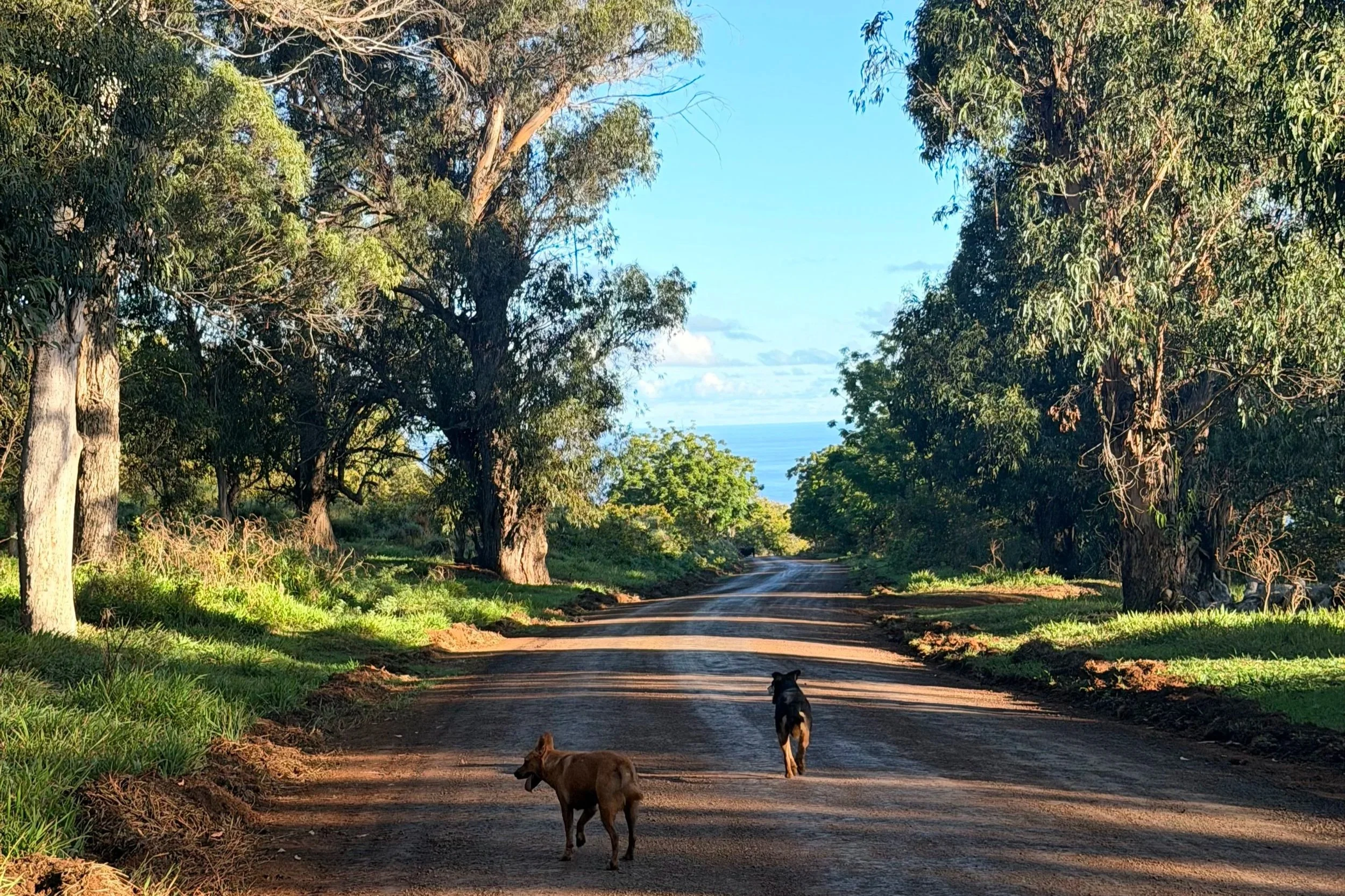
You can hire a car in Rapa Nui and there are some tour guides who require you to have a car to transport them as they take you around the island.
However we didn’t. It’s not cheap and they charge a lot to transfer you to and from the airport (which is only about a 5 minute drive away!)
Instead we hired a guide with their own car and on our day off we got a taxi to and from Anakena beach which cost 40,000 pesos for a return trip.
In the town we were easily able to access everything on foot from our Airbnb to a hire car would have been just another expense!
What is the weather like in Rapa Nui?
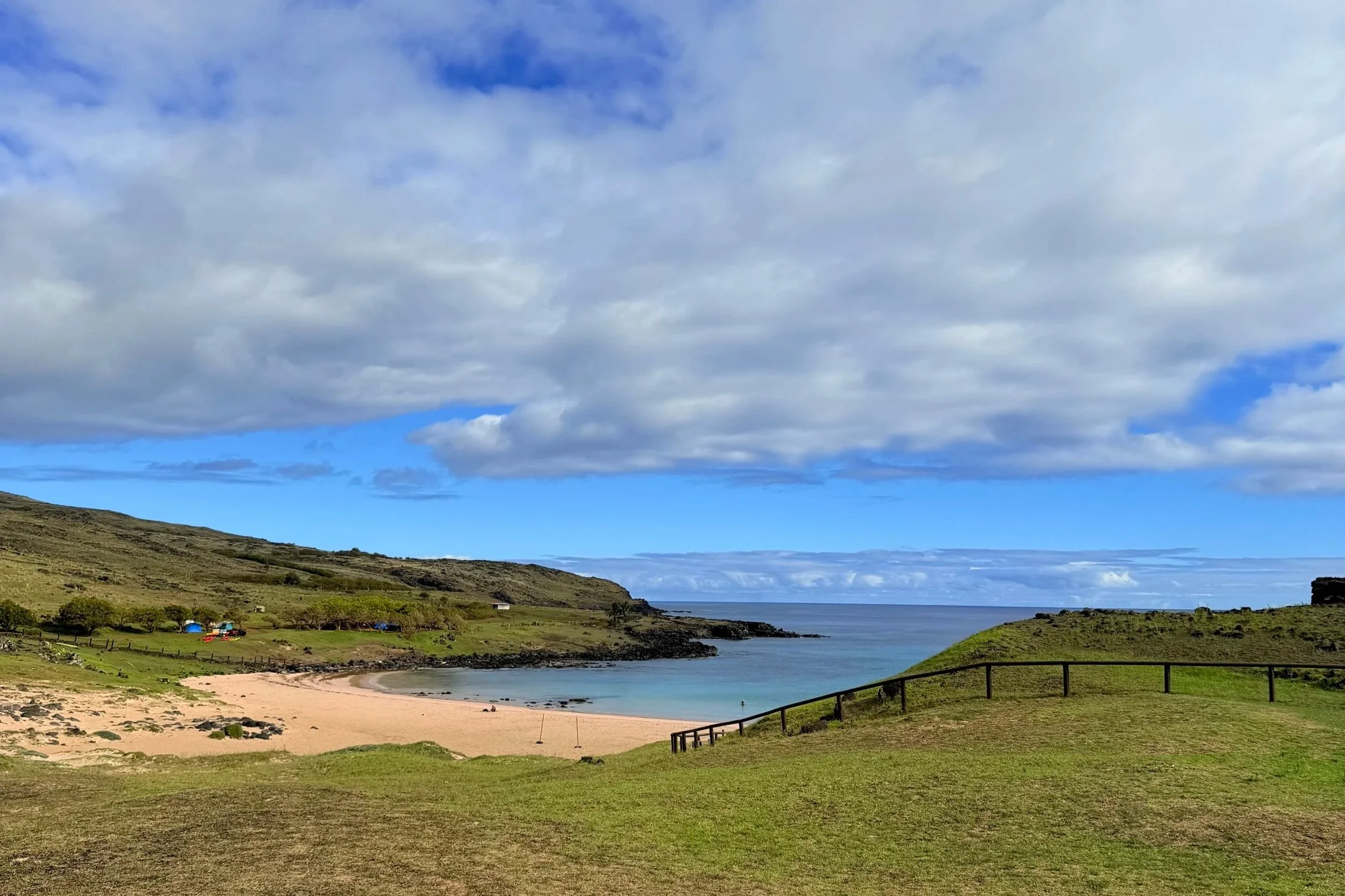
We visited Rapa Nui in April and the weather was beautiful. It was around 24°c all day (and all night!) and the sun was very strong so bring SPF.
As it’s an island in the middle of the ocean, Rapa Nui has fairly fast changing weather so periods of rain and clouds passed very quickly and overall the weather was perfect and warm for spending so much time outside.
What to pack for a long weekend in Rapa Nui
Rapa Nui is mostly warm and humid, and due to almost all of the activities being outdoors it calls for a practical wardrobe. We knew we would be walking around historic sites, going to the beach, and eating at restaurants in the town. So I packed a mix of comfy clothes for walking and slightly nicer (but not fancy!) clothes for the evenings.
Here is my Rapa Nui packing list:
Two pairs of shorts (one denim, one cotton)
A pair of wide leg trousers
Two t-shirts
Two vest tops
One linen shirt (I needed light layers in the evenings)
A pair of sandals
A pair of trainers
A bikini
Sunglasses
A sun hat
A water bottle
A day bag
A tote bag for the beach
A beach towel
Daily toiletries including SPF
Plug adapters
Chargers
An e-book
Find out more about how we spent four weeks in Chile here.